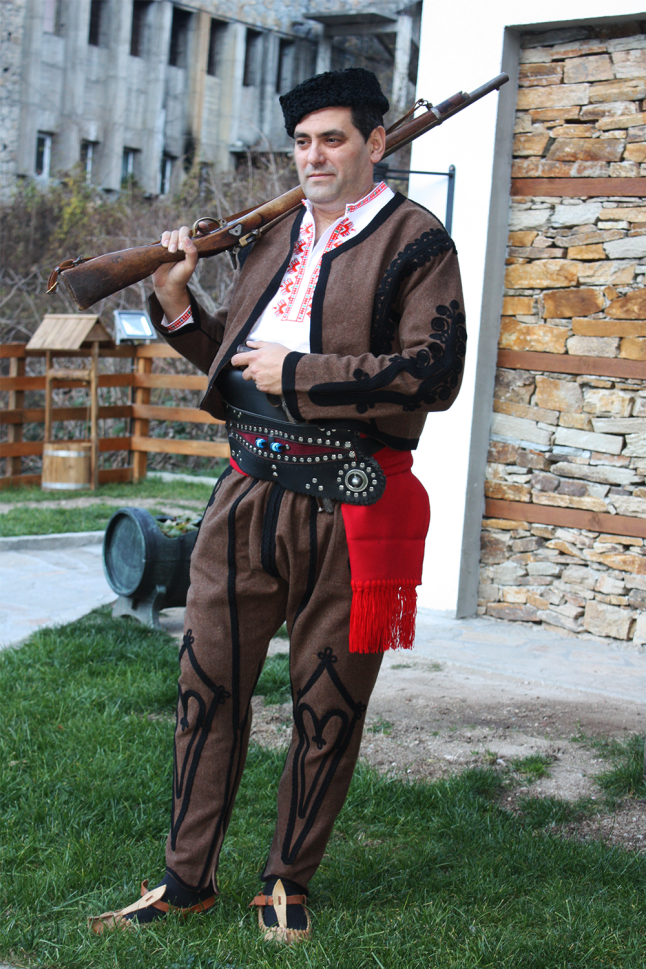
History and Traditions of the Men's Pirin Folk Costume from Razlog and Bansko
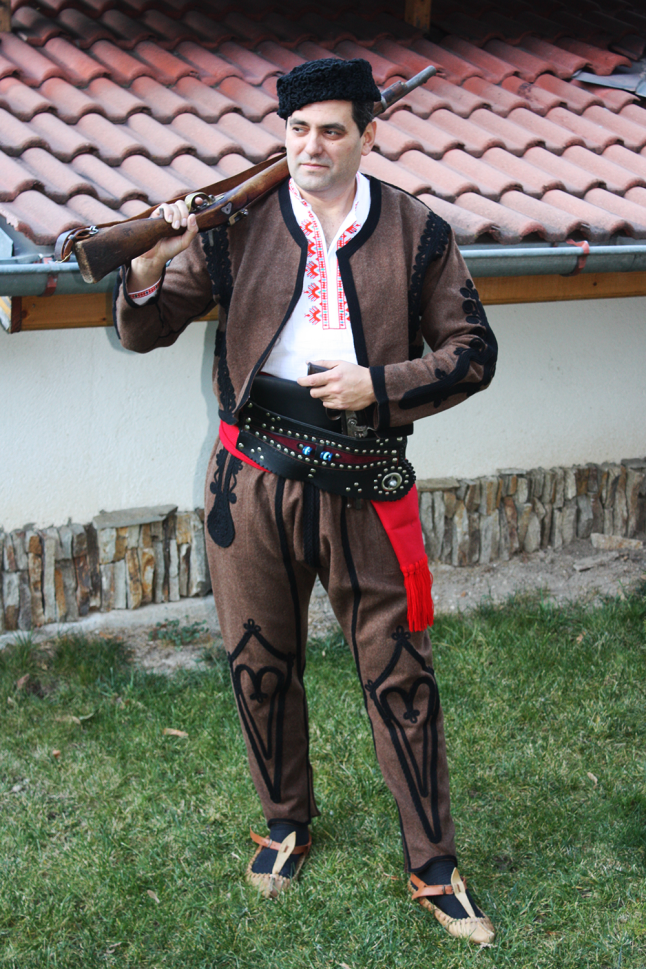
The traditional men's folk costume from the Razlog region is an important part of the rich ethnographic heritage of Bulgaria's Pirin Mountains. Shaped by mountain life, local craftsmanship, and centuries-old traditions, it reflects the lifestyle, social standing, and aesthetic preferences of the people living in the Razlog and Bansko areas.
During the 19th and early 20th centuries, the dark woolen clothing style became widely established in this region. This traditional type of men's attire was characterized by predominantly dark-colored woolen fabrics. Despite its name, the clothing included various shades of brown, grey, and black. These darker tones gave the traditional men's costume its distinctive, dignified, and imposing appearance.
Wool and the Traditional Craft of Woolen Garment Making
One of the most significant characteristics of traditional clothing in the Razlog region was the extensive use of woolen fabrics. The development of livestock farming and local crafts in the mountainous areas provided the raw materials needed to produce durable and hard-wearing garments.
Of particular importance was aba, a thick, traditionally woven woolen fabric used to make various items of men's clothing. Its production and processing required specialized knowledge and skills passed down through generations.
The craft of making garments from aba wool became an important trade in many Bulgarian settlements. Skilled craftsmen, known as abadzhii, created traditional men's garments adapted to local preferences, everyday activities, and climatic conditions.
Distinctive Features of Traditional Men's Clothing
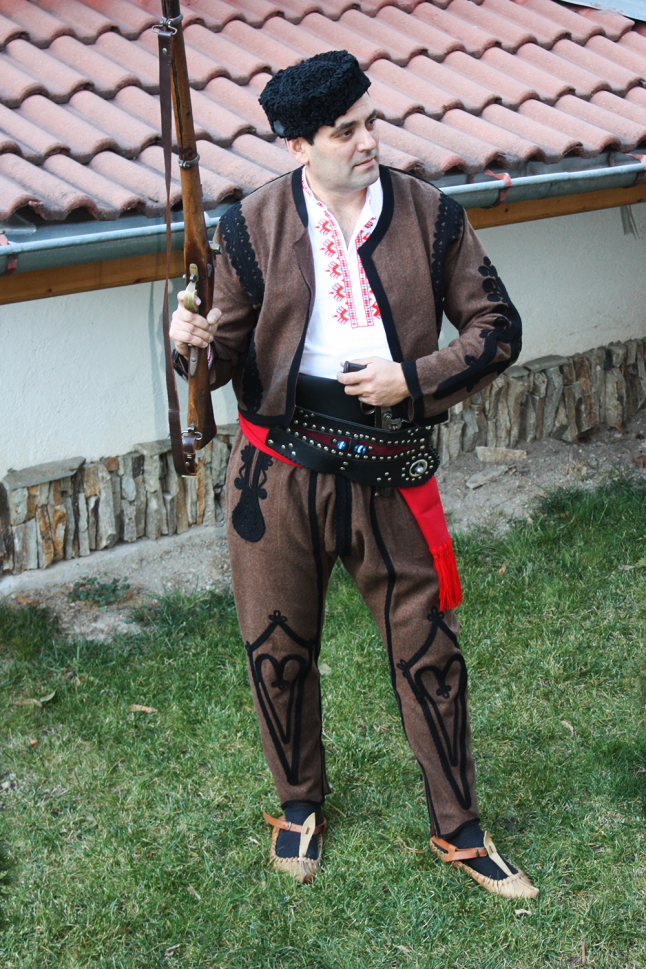
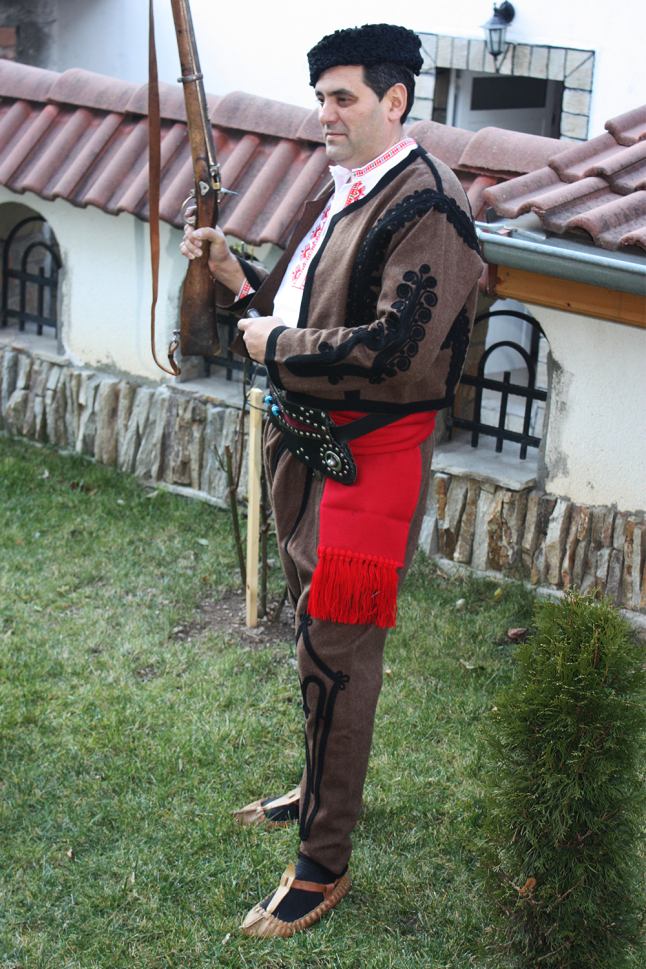
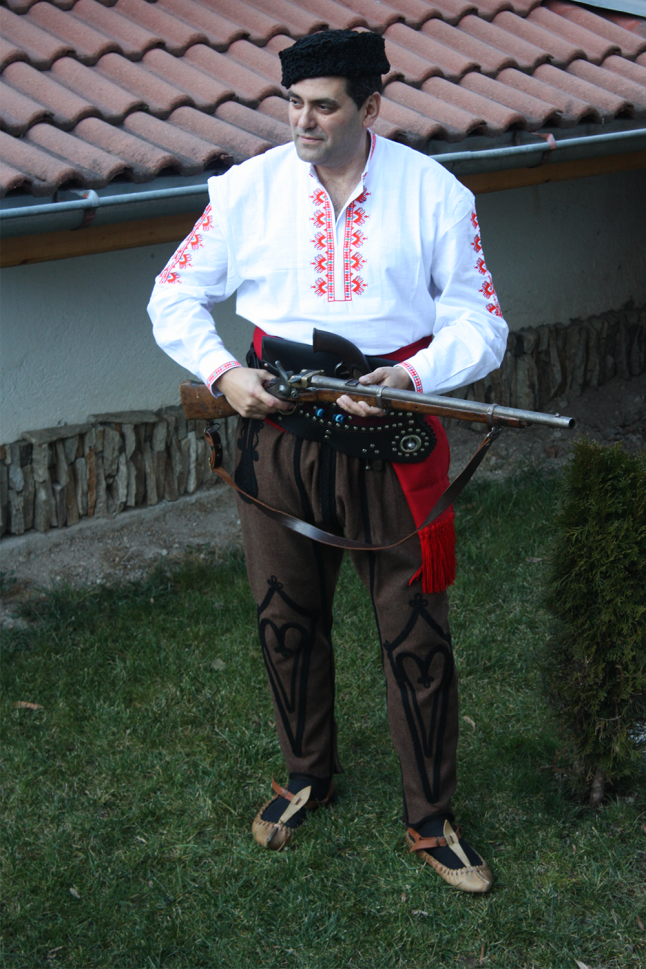
The men's folk costume from the Razlog region is distinguished by its characteristic combination of tailoring, colors, and decorative elements. The loose-fitting traditional trousers, known as poturi, allowed freedom of movement, while the woolen outer garments provided protection against the cold mountain climate.
An important decorative feature was the use of gaytani — braided woolen cords traditionally applied to garments as ornamental trimming. Besides emphasizing the structure and contours of the clothing, these cords formed distinctive decorative patterns that enhanced the overall silhouette.
The traditional sash also played an essential role, serving both practical and decorative purposes. Wrapped around the waist, it secured the garments and contributed to the characteristic color combinations of men's traditional attire.
The Folk Costume in Social and Festive Life
In the past, traditional folk costumes were important indicators of a person's regional identity and social standing. Differences in tailoring, fabrics, and ornamentation often revealed whether a garment was intended for everyday work, festive occasions, or special community events.
Festive men's costumes were worn during weddings, religious celebrations, village fairs, and family gatherings. More elaborately decorated garments required considerable time, skill, and craftsmanship to produce, making them highly valued possessions that families carefully preserved.
In the Bansko and Razlog regions, traditional clothing remains an important part of local cultural memory, preserved through family heirlooms, museum collections, traditional celebrations, and folklore customs.
Preserving the Traditional Clothing Heritage of Razlog
With the gradual introduction of urban-style clothing during the 19th and 20th centuries, traditional folk costumes began to disappear from everyday use. Nevertheless, many historical examples survived thanks to the efforts of local families, ethnographic museums, and researchers dedicated to preserving Bulgarian folk culture.
Today, the men's Pirin folk costume continues to play an important role in folklore ensembles, traditional festivals, historical reenactments, and cultural events.
At Bozov Stil, we are dedicated to preserving and recreating distinctive examples of traditional Bulgarian folk clothing, paying special attention to authentic tailoring, natural fabrics, and regional characteristics.
The men's Pirin folk costume from Razlog and Bansko is a testament to the craftsmanship of traditional Bulgarian artisans and the richness of Bulgaria's cultural heritage - a tradition that continues to thrive today.